
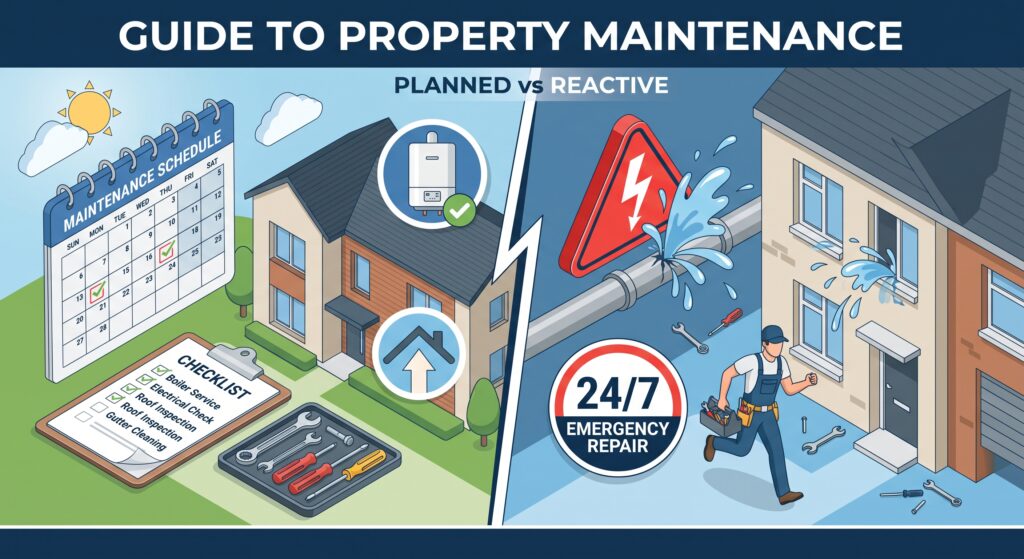
Property problems can happen at any time. Some can be prevented with regular checks. Others
need urgent action. Knowing the difference helps you plan better.
Planned and reactive property maintenance covers both needs. Planned work helps prevent
faults. Reactive work fixes problems after they happen. At On Call Property Services, we help
landlords and property managers manage both.
This guide explains each type of maintenance. It also shows when you may need them.
What Is Planned Property Maintenance?
Planned property maintenance is arranged in advance. It follows a set schedule. The goal is to
find and prevent problems early.
Regular checks can reduce the risk of sudden faults. They also help keep key systems working
well. A planned schedule allows us to complete work before small issues become serious.
Common planned maintenance tasks include:
- Boiler servicing
- Heating system checks
- Electrical inspections
- Plumbing checks
- Roof inspections
- Gutter cleaning
- Drain checks
- Painting and decorating
- Fire safety checks
- Door and window repairs
For example, we can service a boiler before winter. A roof can be checked before bad weather.
This makes our planned maintenance service useful for busy property managers.
What Is Reactive Property Maintenance?
Reactive maintenance starts after a fault occurs. It deals with a problem that already needs
repair. Some faults need a quick response.
A burst pipe is a clear example. Water can damage floors, walls, and fittings. Fast action helps
us limit the damage and restore the property.
Reactive maintenance may include:
- Burst pipe repairs
- Boiler repairs
- Electrical fault repairs
- Blocked drain clearance
- Broken lock repairs
- Door and window repairs
- Water leak repairs
- Emergency roof repairs
Some faults cannot wait until the next working day. In these cases, our 24 hr maintenance
support can help with urgent property problems.
Why Hire an Electrician for Electrical Faults?
Electrical faults can create serious safety risks. They can cause shocks, fires, or power loss. A
trained electrician can find the cause safely.
This is why hire an electrician searches often follow an electrical problem. Professional testing
helps find the fault. It also helps us choose the correct repair.
Planned vs Reactive Property Maintenance
The main difference is timing. Planned maintenance happens before a serious fault occurs.
Reactive maintenance starts after a problem appears.
Both have an important role. A clear maintenance plan helps us prevent faults. It also supports
quick repairs.
| Planned Maintenance | Reactive Maintenance |
| Scheduled in advance | Starts after a fault |
| Helps prevent problems | Fixes existing problems |
| Makes budgeting easier | Costs may be unexpected |
| Reduces avoidable disruption | May require urgent access |
| Supports long-term care | Restores normal use |
Planned maintenance cannot prevent every fault. Pipes can still burst. Boilers can stop working.
This is why property managers need both options.
Why Do Landlords and Property Managers Need Both?
Every building needs regular care. Heating, plumbing, and electrical systems can wear out over
time. Roofs and fixtures can also develop faults.
Planned maintenance helps find these issues early. Reactive maintenance deals with sudden
problems. Combining both gives us a practical way to protect the whole property.
This approach also makes property management in London easier. Managers can plan routine
work. They can also have support ready for urgent faults.
How Can Planned Maintenance Reduce Costs?
Small faults can become expensive problems. A small roof defect may cause a leak. Water can
then damage ceilings, walls and electrical fittings.
Regular inspections can spot early signs of damage. Repairs can then be planned before the
issue grows. This allows our clients to avoid many preventable repair costs.
A simple maintenance plan should record:
- Assets that need checks
- Inspection dates
- Service dates
- Repairs already completed
- Faults that need further work
- Future maintenance dates
Clear records make budgeting easier. They also help managers track work across several
properties.
When Does Reactive Maintenance Become Urgent?
Not every repair is an emergency. A loose handle may be safe to schedule. A major water leak
is different.
The level of risk should guide the response. During a call-out, we consider safety, property
damage, and loss of essential services.
Urgent maintenance may be needed for:
- Major water leaks
- Burst pipes
- Dangerous electrical faults
- Heating failures
- Broken external locks
- Flooding from blocked drains
- Serious roof damage
- Unsafe building damage
Reporting the problem clearly also helps. Photos and fault details help the team prepare before
they arrive.
How to Choose a Property Maintenance Company
Managing several trades can take time. You may need a plumber one day and an electrician the
next. A single maintenance provider can make this easier.
A property maintenance company in London can handle many jobs. This gives us one point of
contact. This allows us to support planned work and reactive repairs under one service.
When comparing property maintenance companies in London, check their services first. Look at
their experience and response process. Clear communication is also important.
The right maintenance company should explain each repair. Reports should state what went
wrong. They should also explain what work was completed.
Property Maintenance for Commercial Buildings
Commercial properties can have different maintenance needs. Offices, shops and managed
buildings often serve many people each day. A fault can affect normal business activity.
Reliable commercial property maintenance in London can help reduce this disruption. Planned
checks support key building systems. Reactive repairs allow our team to respond when
unexpected faults occur.
Regular building maintenance in London can also protect the condition of the property. This can
help.
