
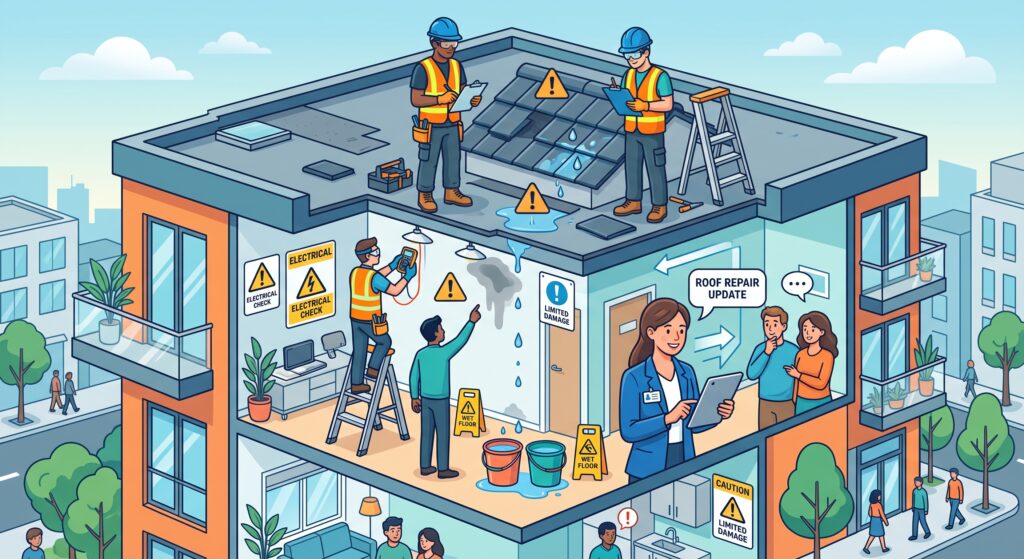
A roof leak in a block of flats can affect more than the top-floor home. Water can spread through
walls and ceilings. It can also reach shared areas before anyone finds the leak. For a property
manager, the first task is to keep people safe. The next is to limit damage, arrange a proper
inspection, and keep residents informed.
The steps below can help you manage the leak from the first report through to the final repair.
1. Check for immediate risks
A resident may report a damp patch, dripping water or a ceiling that has started to bulge. Ask
where the water is entering. Find out when the leak began. Check if water is near lights, sockets
or other electrical equipment. Check whether the leak has reached a corridor, stairwell or
another flat.
If water is near electrics, keep people away. Ask a qualified electrician to check the area. Do not
ask residents to touch wet fittings or attempt electrical repairs. A ceiling that appears unstable
also needs prompt attention.
Water can spread beyond the flat where it first appears. Ask nearby residents to check for signs
of damage, especially in the flats below.
3. Limit the damage while help is arranged
Once the area is safe, take these steps to protect the building and its residents:
- Ask residents to move belongings away from the leak, where it is safe to do so.
- Place a container under dripping water if this can be done safely.
- Keep people clear of wet floors and damaged ceilings.
- Record which flats and communal areas are affected.
- Arrange an urgent roofing assessment if water is still entering.
These steps may reduce damage, but they will not fix a leak in the roof. A roofer needs to find
the entry point and assess the condition of the surrounding area.
For example, a top-floor resident may see water near a window after heavy rain. The cause
could be elsewhere on the roof. Water often follows a hidden path before it becomes visible
indoors.
3. Tell residents what will happen next
A roof leak is disruptive. Residents need a clear update, even when the cause is still unknown.
Tell affected residents when you have contacted a contractor. Explain if the contractor needs
access to their flats. Let residents know when to expect the next update.
Keep one record of reports from residents. Include the flat number, time, location of the leak,
and any photos they provide. This helps the roofing team see how the problem has developed.
It also gives the property manager a reliable record of the response.
Start with a short message to residents. State what has been reported and what action is
underway. Explain how they can report more water damage. Continue to update people if the
repair takes longer than expected. Clear resident communication is part of effective
maintenance work.
4. Arrange a roof inspection
A roof leak in a block of flats needs a proper diagnosis. Ask the contractor to inspect the likely
entry point and nearby roof features. The cause might be a damaged covering, a failed seal, a
blocked outlet, or a problem around a roof opening.
Give the roofer useful details before the visit:
- When did the leak start?
- Does it happen only during heavy rain or also during light rain?
- Which rooms or shared areas are affected?
- Have there been earlier leaks or roof repairs?
- Can the contractor access the affected flats?
Photos of indoor damage can help, but they cannot confirm the cause on their own. Ask the
contractor to explain what they found. Confirm what work is needed. Check if a temporary repair
is needed first.
At On Call Property Services, we work on different types of roofs. Electrical work and other
property services are also available. That range can help when a leak affects more than the roof
itself.
5. Check responsibility, insurance, and approval
The person who arranges the work and the person who pays for it may differ. Check the lease
first. Then review the building’s insurance policy and management agreement. Responsibility for
a leak depends on its cause and the terms of those documents.
Record the date of the first report. Save photos and the contractor’s findings. Keep a record of
each decision and its cost. If an insurance claim may be needed, check the policy’s reporting
process promptly. Residents may also need to contact their own insurer about damaged
belongings.
Do not let uncertainty over the final cost delay an urgent safety response. Record why the
urgent work was needed. Then confirm who must approve the permanent repair.
6. Complete the repair and check the affected areas
A temporary measure may stop water entering during bad weather. It should be followed by a
clear plan for the permanent repair. Ask the contractor for a written description of the work and
any areas that still need attention.
After the roof work, check the affected flats and shared spaces. Check for trapped moisture and
damaged surfaces. Inspect any electrical fittings exposed to water. Arrange the right trade for
each issue. Ask a roofer to repair the roof. Have an electrician check any electrical fittings
affected by water.
Before closing the job, tell residents what was repaired. Give them a contact number in case the
leak returns. A completed roof repair should also be added to the building’s maintenance record.
7. Use the incident to improve roof maintenance
The repair report may show a wider issue. Record the cause of the leak. Add any blocked
outlets or worn roof coverings to the maintenance schedule. Schedule a check if the fault has
happened before. Review earlier reports from the same area to see whether the problem has
returned.
Regular roof checks can help a property manager spot damage before it reaches a flat. They
also give the team a clearer history when a new leak is reported. Turn each inspection finding
into a clear task. Assign someone to it and set a follow-up date.
Frequently asked questions
Is a roof leak in a block of flats an emergency?
It can be. Treat fast-moving water as urgent. Act at once if it reaches electrics or an escape
route. A bulging ceiling also needs urgent attention. Keep people away from the danger and
arrange the appropriate contractor promptly.
Who is responsible for repairing the roof?
Responsibility depends on the lease and the building’s arrangements. The landlord, freeholder,
management company, or managing agent may organise the repair. The cause of the leak,
lease terms, and insurance policy help determine how costs are handled.
Why hire an electrician after a roof leak?
Even a small leak can reach wiring or lights. An electrician can check the affected fittings. They
can confirm when it is safe to use them.
Can a property manager fix the leak with a temporary patch?
A temporary repair may limit water entry until the permanent work can take place. It does not
replace an inspection. The roofer still needs to identify the cause and recommend a lasting
repair.
Get help with a roof leak
A quick, organised response can protect residents and limit damage across the block. Managing
a roof leak? Contact On Call Property Services. We can discuss an inspection and the repairs
needed.
