
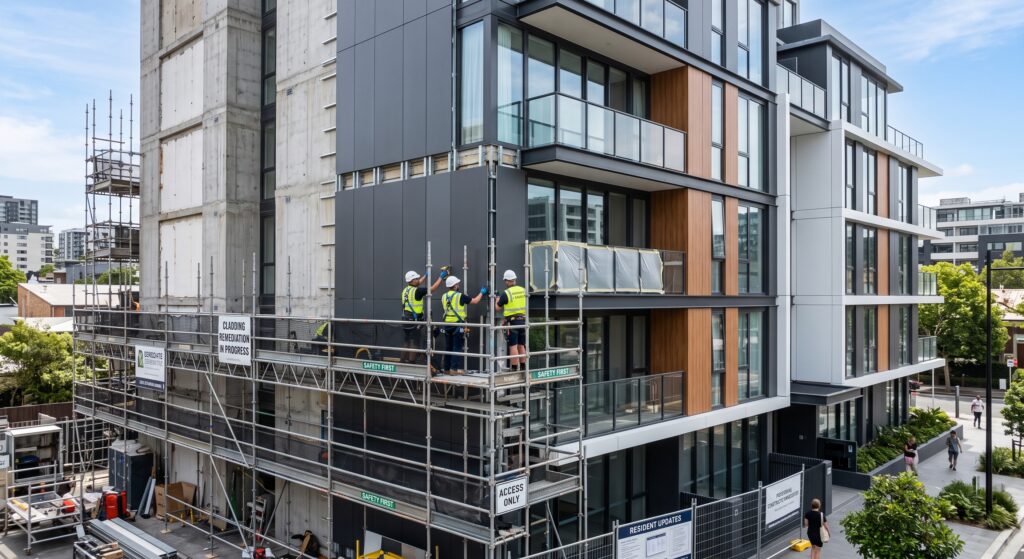
Roof leaks put managing agents under pressure. Worn brickwork and ageing shared wiring add
to the strain. Residents want repairs completed quickly. Leaseholders want clear costs. Effective
block major works planning helps balance these needs. For managing agents, we handle major
works and refurbishments.
Before a project starts, each decision needs a clear basis. A survey defines the problem. A
budget sets the funding needs. A written programme guides the work. This checklist explains
the steps we recommend reviewing before appointing a contractor.
Establish the Building’s Condition
Repeated repairs can hide a wider fault. Damp ceilings may point to damaged roof coverings,
blocked gutters or failed flashing. Before choosing a repair, we recommend a professional
condition survey.
The survey brief should cover:
- Roof coverings, gutters and drainage.
- Brickwork, render and external finishes.
- Windows, balconies and shared entrances.
- Communal electrical systems.
- Relevant fire safety defects.
A useful report records defects with photographs and ranks their urgency. It should explain
which items need repair, replacement or further checks. For tenders, our reports include photos.
Quotes follow the final survey.
Define the Scope and Priorities
An unclear brief makes quotes hard to compare. One contractor may price a small repair while
another allows for full replacement. A clear brief helps us plan the work. It lists materials,
quantities, access needs and finishes.
Separate the proposed work into three groups:
- Urgent: defects that threaten safety or cause active damage.
- Planned: repairs needed within an agreed period.
- Optional: improvements that can wait for further funding.
Example: Roof Repairs and Redecoration
Consider a block with water entering top-floor flats and peeling hallway paint. This is a planning
example, not a completed project. In this situation, we would recommend resolving the water
entry first. Painting before the building dries could lead to further damage and repeat costs.
Check the Lease and Available Funds
A repair budget does not establish the right to charge leaseholders. The lease sets out repair
duties and how costs are shared. Before seeking quotes, we recommend checking the lease
terms. Ask a legal adviser if anything is unclear.
The funding review should confirm:
- Which party must arrange the work.
- How each flat’s contribution is calculated.
- Whether reserve funds can cover the project.
- Whether advance service charge demands are allowed.
- Which approvals the client requires.
A realistic estimate includes VAT, access costs, professional fees and waste removal. It should
also allow for risks such as concealed damage. To budget for extra costs, we recommend a
surveyor’s risk review. Use the findings to set aside funds.
Plan Section 20 Consultation Early
Leaseholder consultation affects the work schedule. Some major works require formal
consultation. Before setting a start date, we recommend checking the rules.
For the usual qualifying works process, the landlord or authorised agent should:
- Issue a notice of intention explaining the proposed work.
- Allow 30 days for observations and contractor nominations.
- Obtain estimates and issue the required statement.
- Allow a further 30 days for observations.
- Explain the contractor choice where required.
Those consultation periods need space in the programme. Rules vary by contract type. Before
sending notices, we recommend having them checked.. Keep copies of observations,
responses and the final decision.
Compare Contractors on Scope and Capability
The lowest quote may omit important work. A suitable maintenance company should explain its
price, exclusions and proposed approach. When reviewing bids, we recommend comparing
each offer against the same specification.
Check the following evidence:
- Experience with occupied blocks.
- Suitable insurance cover.
- Relevant trade competence.
- Site supervision arrangements.
- References for similar projects.
- Written payment terms and defect procedures.
Why Hire an Electrician for Communal Works?
Communal lighting and wiring need suitable electrical expertise. These tasks should form a
clear part of the project brief. For electrical work, we recommend assigning a qualified
electrician. Confirm who will provide the test records.
Confirm Safety and Access Arrangements
An occupied block remains a home throughout the project. Scaffolding, deliveries and noisy
work can affect residents each day. Before work starts, we recommend agreeing a safety plan. It
should cover shared routes and site risks.
The team must check its duties under the CDM Regulations. Work involving several contractors
requires a principal designer and principal contractor. Before work starts, we recommend
recording each appointment and duty.
Include these items in the access plan:
- Clear escape routes.
- Safe scaffold access.
- Delivery and waste collection times.
- Parking or pavement permissions where needed.
- Arrangements for vulnerable residents.
- Planned service shutdowns.
Give Residents Clear Updates
Unexpected disruption can damage trust, even when repairs are necessary. Residents need
advance notice of noise, restricted access and changes to daily routines. A simple
communication plan helps us keep project information clear and useful.
Each update should state what will happen, when it will happen and who can answer questions.
Share revised dates promptly. Keep a record of concerns and agreed responses. Resident
messages support the project, but they do not replace formal leaseholder consultation.
Control Changes and Complete the Handover
Hidden damage may appear once work starts. Every change needs a written description, price
and effect on the timetable. To keep costs visible, we recommend using a variation log and
agreeing who can approve extra work.
Before final payment, the appointed professional should inspect the work. They should list any
remaining defects. A clear handover helps us plan future maintenance.
Collect:
- Inspection and completion records.
- Relevant test certificates.
- Product details and warranties.
- Maintenance instructions.
- A defects list with agreed deadlines.
- Final cost records.
Frequently Asked Questions
What Is Block Major Works Planning?
It is the process of preparing substantial repairs or upgrades to shared parts of a block.
Surveys, funding, consultation and contractor selection shape the plan. For managing agents,
we recommend treating these steps as one coordinated project.
Can Urgent Work Proceed Without Consultation?
Urgency does not automatically remove consultation requirements. A landlord may seek tribunal
dispensation when following the process is impractical. For urgent work, we recommend
recording the risk. Seek advice on consultation and recovering costs.
How Does 24 hr Maintenance Support Major Works?
Reactive maintenance addresses urgent faults while longer-term repairs are planned. It does
not replace a full survey or project scope. Alongside planned work, our published services
include 24-hour reactive support.
Turn the Checklist into a Clear Project Plan
Successful block major works planning starts before the first contractor arrives. Clear evidence,
funding checks and resident updates help reduce avoidable disputes and delays. With a defined
brief, we can discuss the work needed and the practical steps towards delivery.
For an upcoming repair or refurbishment project, contact On Call Property Services. Send the
survey, photos and work details to us. Request a quote for the project.
